Environmental Audit Software for Digital EHS Inspections and ISO 14001 Compliance

Environmental compliance is an operational necessity. Poor waste management, emissions leaks, or missed water logs create significant business risk. flowdit digitizes your entire EHS program—from ISO 14001 internal audits to routine waste disposal checks—providing the structured checklists, photo verification, and audit trails required to satisfy regulators and certification bodies.
See How It Works in 2 Minutes

Give your EHS team a mobile-first platform to execute environmental audits. Capture consistent data, flag nonconformances instantly, and close the loop with verified corrective actions.

Digitize EMS compliance

Manual tracking creates visibility gaps. Replace spreadsheets and paper forms with flowdit—ensuring your environmental data is accurate, timestamped, and always audit-ready. Whether for ISO 14001 or site-level safety checks, keep your documentation compliant and easily accessible.

Maintain ISO 14001 and local regulatory compliance

Centralize all environmental audit planning

Capture environmental impacts with photo evidence

Resolve nonconformances before they escalate
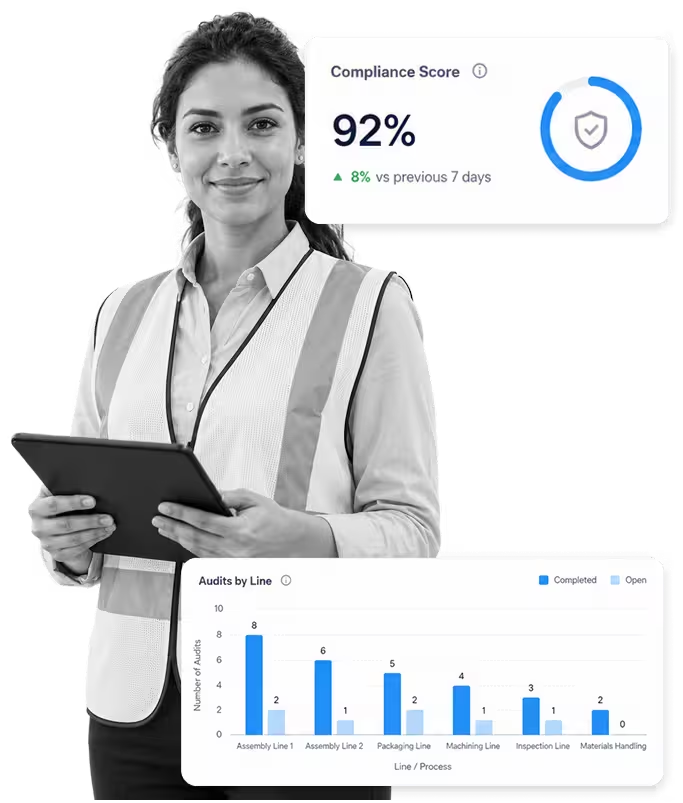
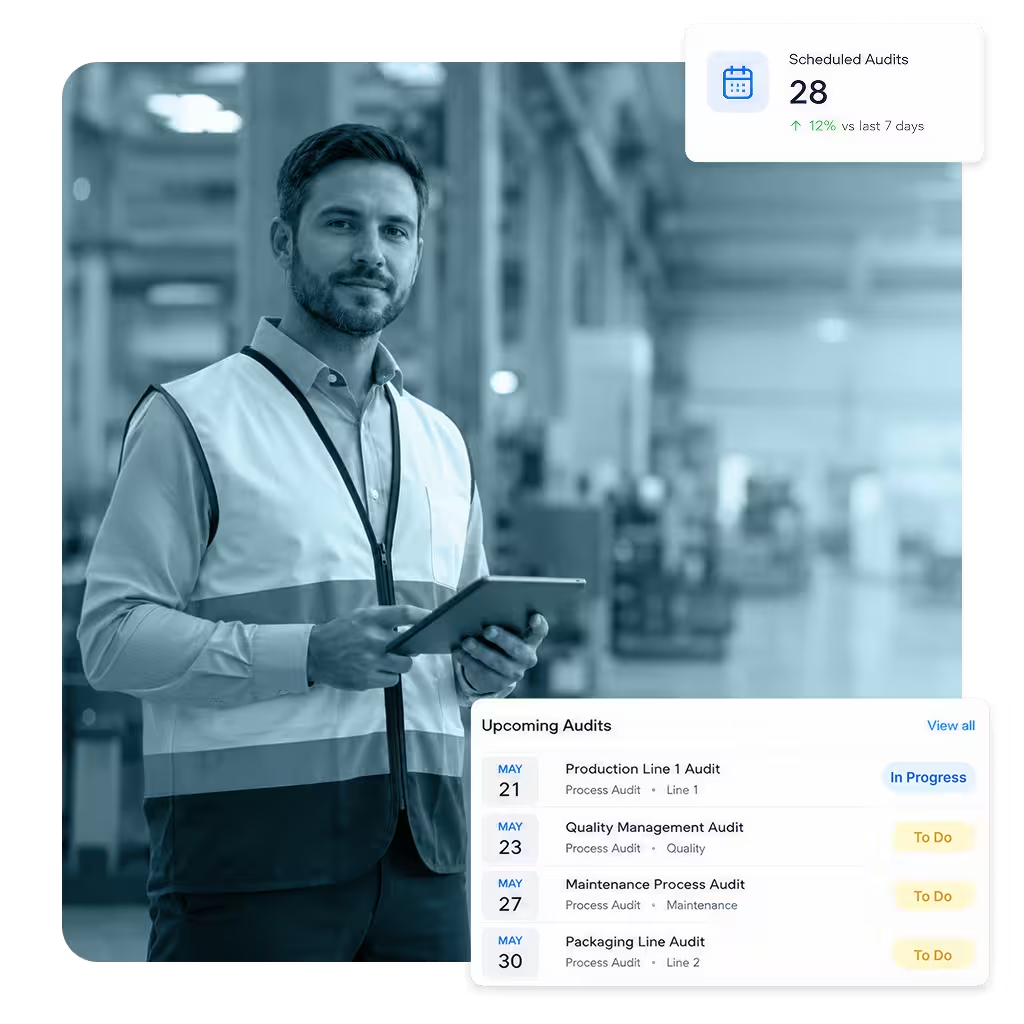
Audit planning and inspection
Planning workflow and strategy board

Coordinate site-wide audits

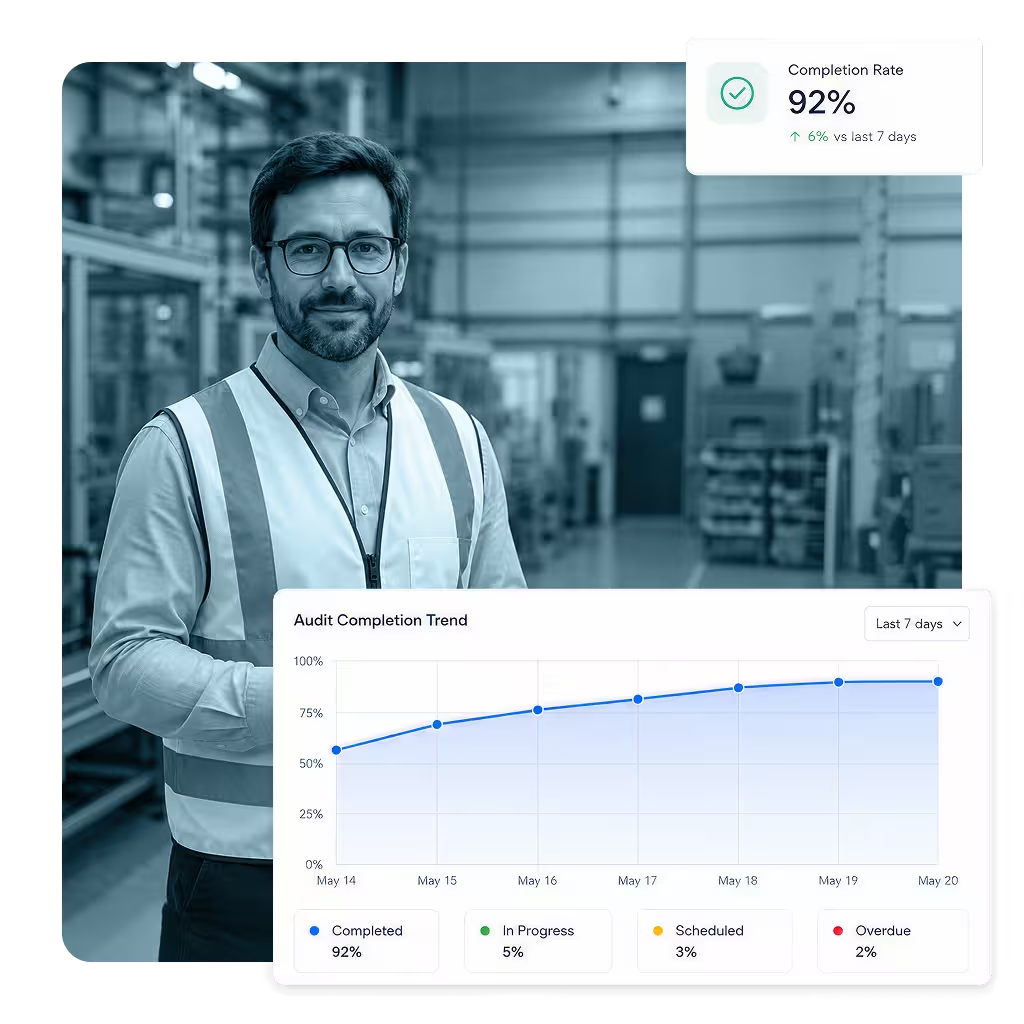
Environmental programs often require complex, multi-frequency checks. flowdit centralizes your audit calendar, providing automated scheduling and status visibility across all locations. Ensure nothing is missed, from waste logs to emission monitoring.

Manage audits from one central portal

Automated scheduling for all inspection intervals

Delegate tasks by site or process

Visibility into site compliance status
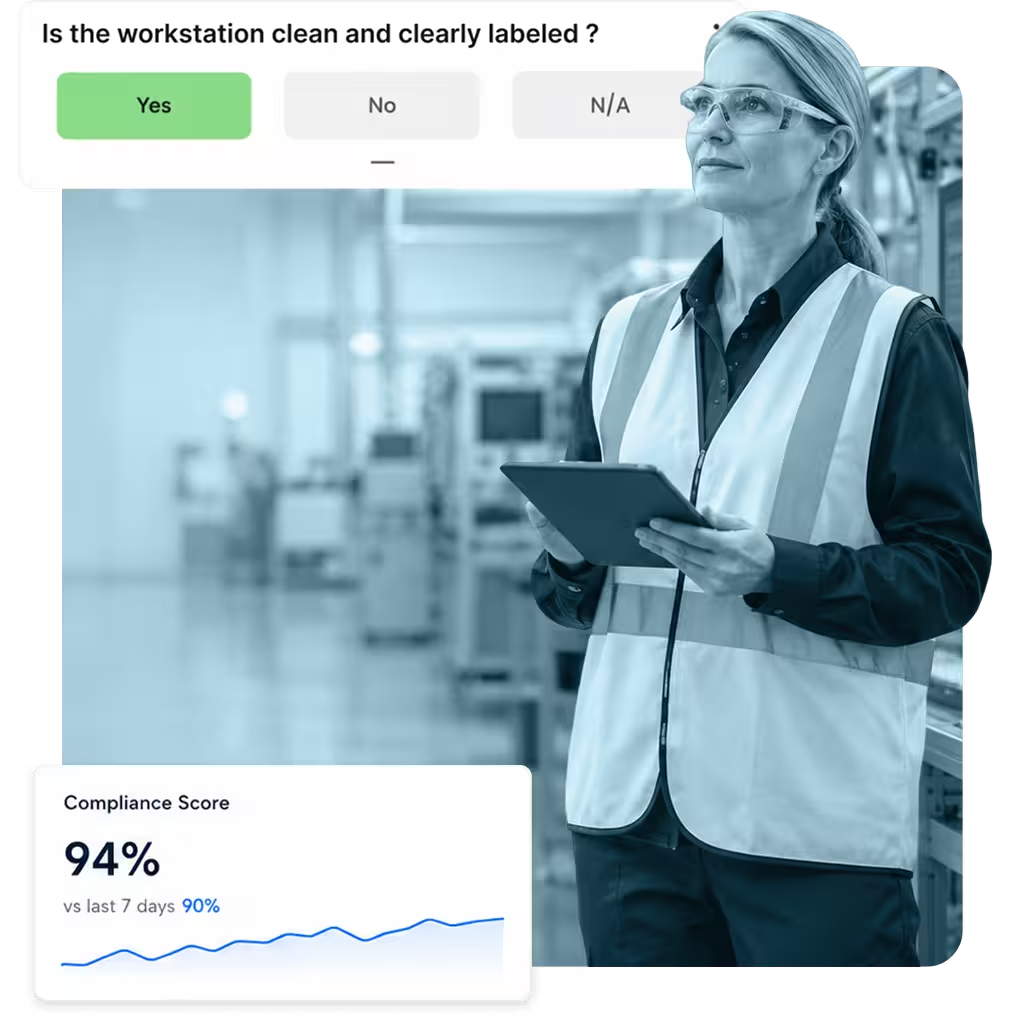
Digital checklist on tablet

Field-ready inspection checklists

Audit where the work happens. flowdit checklists for waste, emissions, and energy use are mobile-ready. Capture photo proof on-site and flag hazards immediately. Our app works offline—essential for remote facilities or floor-level checks.

Tailored checklists for EHS and waste management

Photo evidence for every finding

Conditional logic for rapid reporting

Works offline in any facility zone
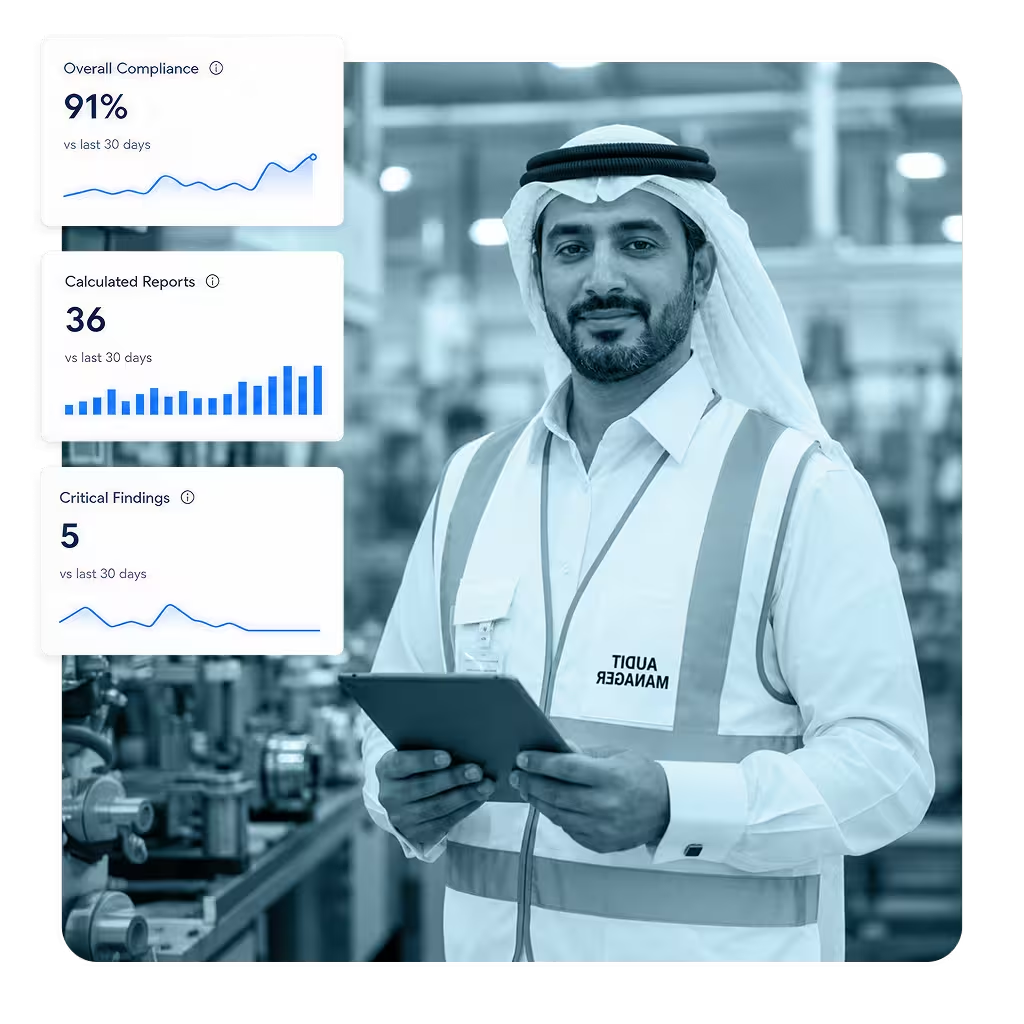
Audit reporting dashboard

Instant compliance reporting

Skip manual data entry. flowdit generates professional, branded PDF reports the moment an audit is complete. Each report organizes findings, photo proof, and corrective action statuses, prepared exactly for ISO 14001 audits and regulatory review.

Automated scoring and severity ranking

PDF reports with embedded photos

Branded reports ready for distribution

Signed, verifiable audit trails
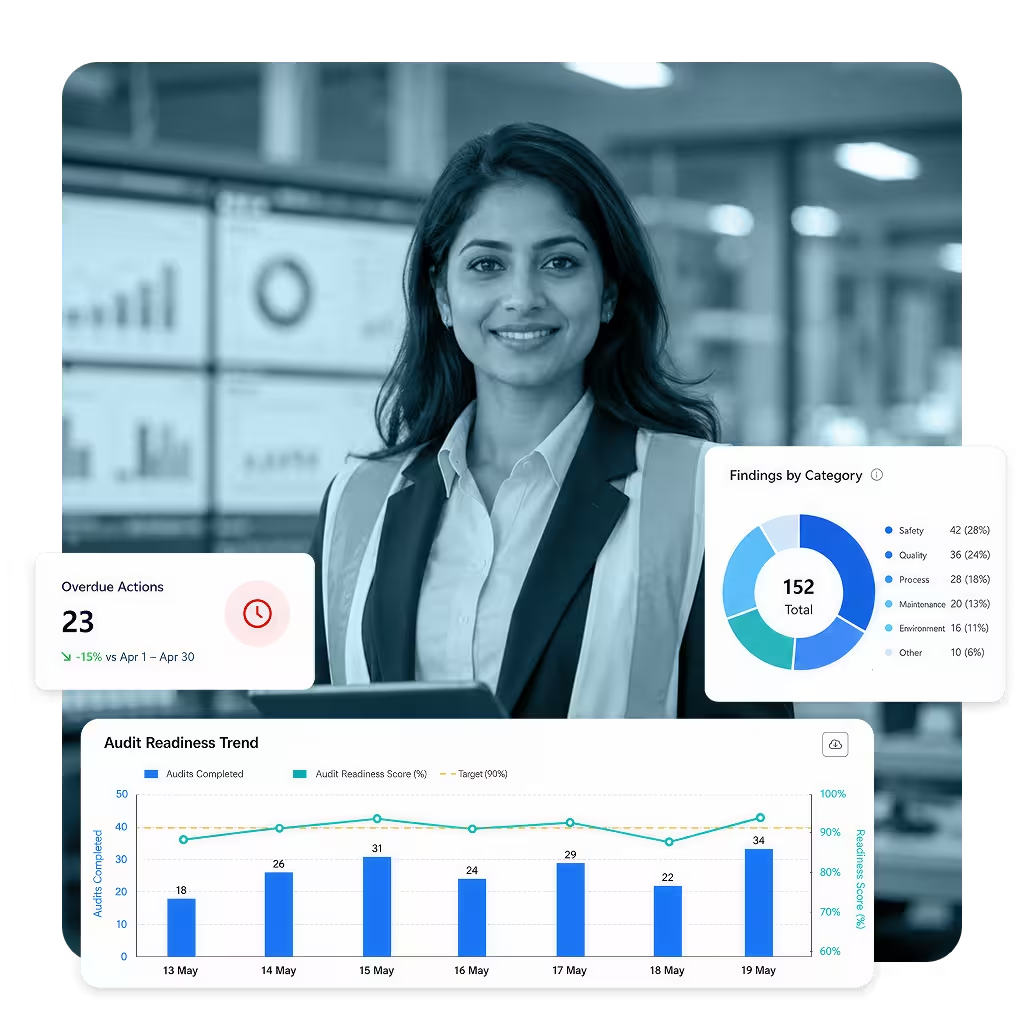
Audit analytics and KPIs

Drive improvement with data

Use data to find root causes. Track performance across sites and environmental aspects. Dashboards reveal which areas suffer from recurring nonconformances, allowing you to prioritize resources where they matter most. Continuous improvement made easy.

Compare compliance across all sites

Identify recurring environmental hazards

Monitor resolution speed per site

Expert setup for your metrics
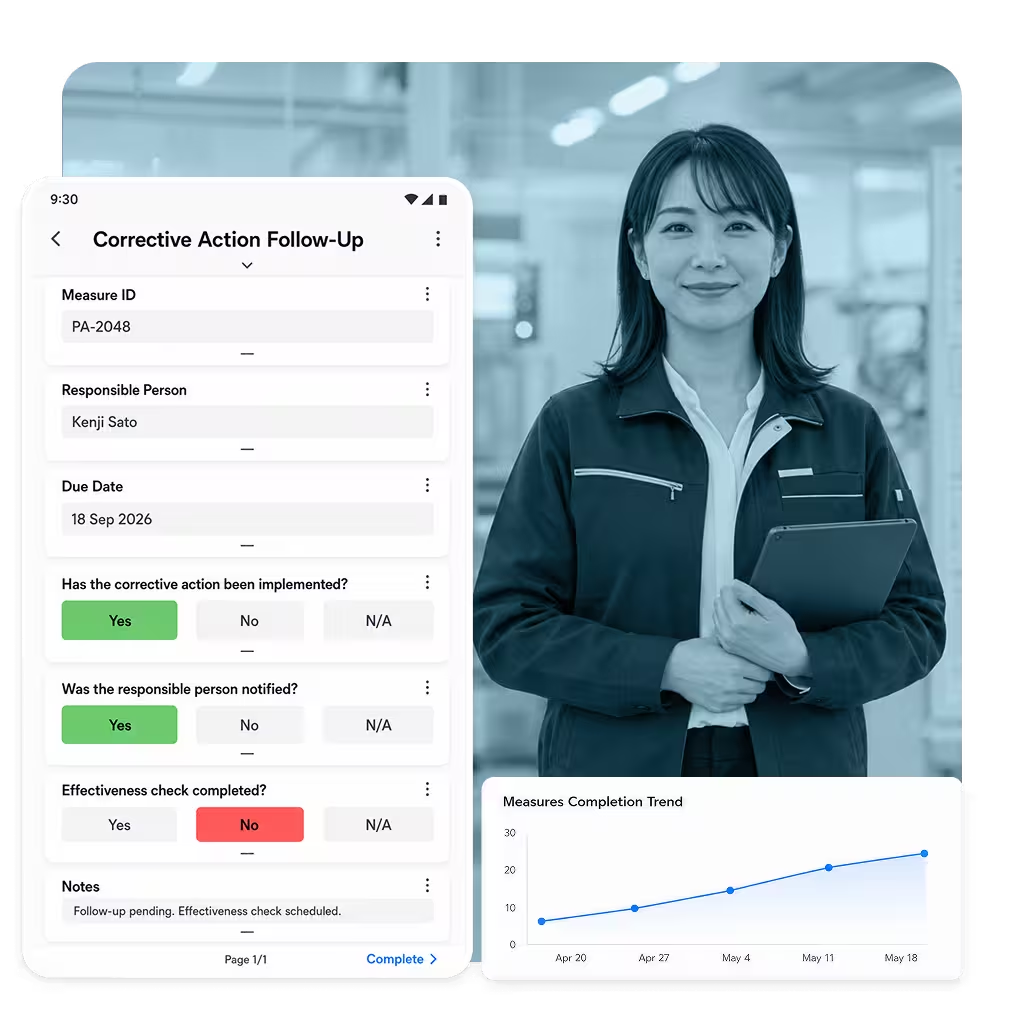
CAPA workflow collaboration

Close the loop on findings

Don't leave hazards unaddressed. flowdit converts every environmental finding into an actionable task with an assigned owner and deadline. Automated alerts keep owners accountable, while required verification checks ensure the fix holds.

Assign owners and deadlines to actions

Immediate escalation for high-risk findings

Automated reminders for all stakeholders

Verify fixes before closing tasks

Software for all environmental audits

Manage all environmental audits centrally. flowdit supports your full EMS program with standardized, digital workflows.

ISO 14001 Internal Audits

Waste Management Audits

Hazardous Material Checks

Spill Response Readiness

Site Housekeeping & Regulatory Inspections

Digitize environmental audits

Plan
Schedules & templates
Execute
Offline-ready mobile app
Capture
Photo evidence
Flag
Severity levels
Assign
Accountability
Resolve
Task completion
Report
PDF compliance reports
Analyze
Trend intelligence

See how top teams use flowdit

Explore more stories

FAQs

An environmental audit is a systematic inspection of a facility's environmental practices, compliance with regulations, and adherence to its Environmental Management System (EMS). It assesses waste handling, emissions, water use, energy consumption, hazardous material storage, and pollution prevention. Audits are required by law in many jurisdictions, mandated by customers, and essential for ISO 14001 certification. Non-compliance results in regulatory fines, permit loss, customer delistings, and reputational damage. Audits identify risks before regulators do.

ISO 14001 is the international standard for Environmental Management Systems. It requires organizations to identify environmental aspects and impacts, set objectives, implement controls, and conduct regular audits to measure performance and ensure compliance. ISO 14001 requires internal audits at least annually and external audits for certification every 3 years. Certification demonstrates to customers, investors, and regulators that your company takes environmental responsibility seriously. Many large retailers and manufacturers require suppliers to be ISO 14001 certified.

An EMS is a structured approach to managing a company's environmental responsibilities. It includes: identifying what parts of your operations affect the environment (aspects), assessing the impact of those activities, setting environmental objectives (reduce waste by 10%, cut water use by 20%), implementing procedures to achieve them, training staff, documenting everything, and auditing to confirm you're meeting goals. An effective EMS prevents pollution, reduces operating costs, and builds market advantage. ISO 14001 is the certified framework for implementing an EMS.

A comprehensive checklist covers: waste management (segregation, disposal records, hazardous waste handling), emissions (air quality, odor control, emissions permits), water use and discharge (treatment, recycling, discharge compliance), energy consumption and efficiency, hazardous materials (storage, labeling, spill kits), pollution prevention (secondary containment, leak detection), staff training documentation, environmental incident records, and monitoring equipment (gauges, meters) calibration. Include site-specific aspects relevant to your operations. Digital checklists guide auditors through conditional logic, capture photo evidence, and flag non-conformances by severity automatically.

An environmental aspect is any activity or condition in your business that interacts with the environment - e.g., gas boiler combustion, waste generation, material storage. The impact is the environmental consequence of that aspect - e.g., the boiler causes air emissions, waste impacts landfills, storage could cause soil contamination if spilled. Audits identify which aspects matter most (significant aspects) based on frequency, severity, and regulatory requirements. You then control significant aspects with monitoring, procedures, and training. This risk-based approach targets resources where they have the most environmental benefit.

ISO 14001 requires internal audits at least annually, but frequency should match your facility's environmental risk. High-risk operations (manufacturing, chemical handling, energy production) should audit quarterly or semi-annually to catch issues early. Legal compliance audits must meet local regulatory schedules - monthly for some facilities, annually for others. Specific aspects require their own monitoring: daily for waste segregation, weekly for water discharge logs, monthly for energy consumption. External audits for ISO 14001 certification occur every 3 years, with surveillance audits annually in between.

Environmental compliance means meeting legal requirements and regulations - the minimum standard you must achieve to avoid fines and permit loss. Sustainability goes further - it aims to reduce your environmental footprint over time, use fewer resources, and minimize long-term impact on ecosystems. Compliance is mandatory; sustainability is strategic and market-driven. Audits enforce compliance first. Beyond that, companies pursuing sustainability set voluntary targets - carbon neutral by 2030, zero waste to landfill - and audit progress against those goals. Strong compliance enables sustainability.

Document the date, location, auditor name, specific finding (e.g., "Hazardous waste storage container missing secondary containment"), severity (critical/major/minor), and photos. Critical findings - regulatory violations, spill risks, permit breaches - require immediate action and notification to authorities if required. Major findings - incomplete records, damaged equipment - need corrective action within 30 days. Minor findings - labeling, training gaps - can be addressed within 90 days. Assign an owner with deadline and track completion. Keep records for at least 3-5 years for regulatory review. Digital systems create timestamped, auditor-signed reports ready for regulators and certification bodies.

Waste management auditing checks that all waste streams are properly identified, segregated, stored, and disposed of according to regulations. Auditors verify: hazardous waste is stored in designated areas with proper labeling and secondary containment, general waste is segregated (recyclables, compostables, landfill), disposal records document where waste goes and by whom, waste minimization practices are in place (reuse, recycling), and staff are trained on proper handling. Improper waste handling creates soil and water contamination risks and regulatory violations. Effective waste audits reduce disposal costs while ensuring environmental and legal compliance.

Track metrics like waste generated per unit produced, water consumption, energy use, emissions, and recycling rate. KPIs might include: "Reduce hazardous waste by 5% annually," "Cut energy consumption per production unit by 10% in 2 years," "Achieve 80% waste diversion from landfill." Compare performance across locations and over time to spot trends. Dashboards reveal which processes are resource-intensive and where to focus improvement. Measuring environmental performance drives accountability, helps identify cost-saving opportunities, and demonstrates progress to regulators, customers, and investors.

Common violations include: incomplete or missing waste disposal records, expired or improper storage of hazardous materials, absence of secondary containment for chemical storage, missing or illegible labeling on hazardous materials, lack of staff training documentation, inaccurate water discharge or emissions logs, damaged environmental monitoring equipment (gauges, meters), blocked emergency response equipment (spill kits, eyewash stations), and lack of procedures for controlling significant environmental aspects. These issues appear repeatedly because they're low-cost to fix but easy to overlook during busy operations. Regular audits catch and correct them before regulators do.

An environmental aspect register is a document that lists all activities in your business that could affect the environment - combustion, waste generation, material handling, water discharge - and evaluates the significance of each. For each aspect, you assess: the environmental impact (severity), how often it occurs (frequency), and whether it's regulated. This produces a prioritized list of "significant aspects" that require control procedures, monitoring, and training. The register is the foundation of your ISO 14001 EMS - it directs where to focus resources and helps auditors understand your environmental risks and how you're managing them.

Internal ISO 14001 audits follow a structured process: establish audit scope and criteria (which processes, which standards, which locations), assign competent auditors (trained, objective), conduct pre-audit review of your EMS documentation, perform on-site inspections against your aspect register and procedures, document findings and non-conformances with evidence, hold exit meeting with management to discuss findings, issue formal audit report, and develop corrective action plans for non-conformances. Audits must be conducted at least annually and should be documented for external auditors to review during certification audits. Digital audit platforms standardize the process and ensure consistency across locations.

Requirements vary by jurisdiction and industry. Manufacturing typically requires air and water discharge permits, hazardous waste manifests, and emissions reporting. Food & beverage faces wastewater treatment requirements and animal waste management. Energy (oil & gas) requires extensive emissions monitoring and spill response plans. Construction must manage dust, sediment, and waste. Healthcare handles medical and hazardous waste with strict protocols. Hospitality focuses on water conservation and waste reduction. Your local environmental authority specifies applicable permits, reporting frequencies, and monitoring standards. Non-compliance can result in permit suspension, fines, and criminal liability. Consult local regulations and industry standards to identify your requirements.

Begin 2-3 months before audit: conduct internal audits to find gaps, close non-conformances with documented evidence, organize all records (3-5 years of waste disposal records, training certificates, monitoring logs, permits, incident reports), verify staff are trained and can explain procedures, inspect facilities for visible compliance (proper storage, labeling, containment), test all monitoring equipment (calibration current), and mock interview key personnel. External auditors review documentation, walk facilities, interview staff, and trace compliance back to your EMS procedures. Thorough preparation prevents audit failure, delays to certification, and costly re-audits. Document everything - auditors expect a complete, organized paper trail of your environmental management activities.

Ready to eliminate audit bottlenecks?

Skip the sales pitch. Tell us your biggest compliance headache, and we will provide an actionable plan within 24 hours.

Sales & demo requests
Mon-Fri, 9:00 am to 5:00 pm GST
+971 52 293 9955‬ support-int@flowdit.com
IOTIVATA - FZCO office in the Dubai Digital Park, Office A5-Dtec, Dubai Silicon Oasis