Layered Process Audit Software for Digital, Multi-Level Manufacturing Audits

Manual scheduling kills LPA programs. Audits get skipped, questions become predictable, and blind spots hide until the month-end report. Stop chasing spreadsheets. flowdit completely digitizes Layered Process Audits. Auto-schedule across all management tiers, randomize questions, and track IATF 16949 and CQI-8 compliance in real-time with automated CAPA workflows.
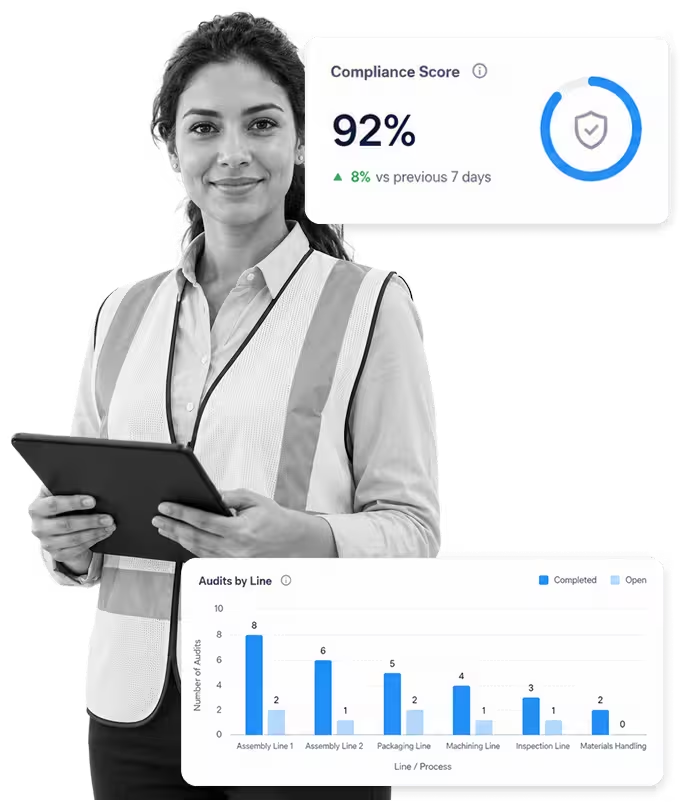
Watch the 2-Minute Demo

Give operators and executives a unified tool to execute LPAs perfectly across all shifts and sites. Ensure on-time auditing, close every finding, and monitor plant health instantly.

Digitize LPAs to ensure process compliance

Paper checklists and email follow-ups make scaling audits impossible. flowdit automates the complete LPA lifecycle. We handle frequency-based scheduling, checklist distribution, and corrective action tracking so you can meet CQI-8 and IATF 16949 requirements while driving genuine continuous improvement.

Meet IATF 16949 and CQI-8 standards

Centralize multi-layer tracking

Catch line deviations instantly

Build a multi-level quality culture
Audit planning and inspection
Planning workflow and strategy board

Automate multi-layer scheduling

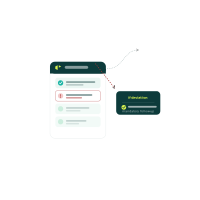
Tracking audit frequencies across operators, supervisors, and executives in Excel guarantees blind spots. Simply define your auditors, scope, and frequencies. flowdit auto-assigns tasks, sends reminders, and immediately escalates missed audits to leadership.

Configure layers and frequencies centrally

Auto-schedule with escalation rules

Randomize questions to avoid bias

View live completion rates
Digital checklist on tablet

Smart LPA checklists with random questions

Static checklists encourage pencil-whipping. flowdit randomizes questions to keep audits unpredictable. If an operator spots a deviation, conditional logic automatically triggers mandatory follow-up steps. Document findings instantly with shop-floor photos, even without internet access.

Map checklists to specific process steps

Randomize questions per management layer

Trigger conditional logic on deviations

Audit offline in Wi-Fi dead zones
Audit reporting dashboard

Auto-score CQI-8 compliant reports

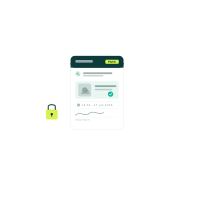
Stop calculating scores manually. flowdit instantly applies your custom pass/fail logic, weighting, and escalation rules. The moment an audit concludes, you get a fully traceable, timestamped PDF report complete with photo proof and e-signatures-perfect for IATF 16949 inspections.

Configure layer-specific scoring models

Set automatic escalation thresholds

Generate branded PDFs instantly

Secure tamper-proof audit trails

Audit analytics and KPIs

Analyze data to find systemic flaws

Raw audit data hides systemic risks. Our embedded Power BI dashboards reveal exactly which lines fail, which layers skip audits, and what defects repeat. Use heatmaps and trend analyses to transform basic compliance into targeted operational improvements.

View heatmaps by process and layer

Compare shift and site completion rates

Spot recurring defects instantly

Fast setup by implementation experts
CAPA workflow collaboration

Close the loop on corrective actions

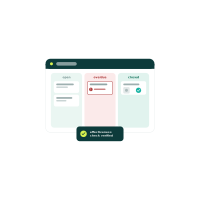
Unresolved deviations cause critical failures. flowdit instantly converts deviations into assigned CAPAs with strict deadlines and mandatory photo proof. Our live CAPA board tracks open actions, auto-escalates overdue fixes, and forces effectiveness checks so issues never repeat.

Link CAPAs directly to audit findings

Auto-escalate overdue corrective actions

Force photo evidence for task closure

Require mandatory effectiveness checks

Built for manufacturing audits

Unify your multi-layer LPA scheduling, random testing, and CAPA resolution alongside your broader 5S and process audits in one central platform.

VDA 6.3 - Process audit integration

IATF 16949 - Automotive standard

CQI-8 - LPA guideline

ISO 9001 - Quality management

5S Audits - Workplace organization

Control every audit layer

Define Layers
Configure tiers and frequencies.
Schedule
Auto-assign random questions.
Execute
Offline mobile checklists.
Document
Photos, notes & e-signatures.
Score
Auto-grade pass/fail.
Assign Tasks
Owners & strict deadlines.
Report
Instant branded PDFs.
Analyze
Live KPI dashboards.

See how top teams use flowdit

Explore more stories

FAQs

A Layered Process Audit is a multi-level quality check where operators, supervisors, and managers each audit the same process at different depths and frequencies. Operators verify task execution daily, supervisors check quality systems weekly, and plant management audits processes monthly. This layered approach catches defects early, prevents blind spots, and ensures continuous accountability across all levels.

CQI-8 is the Automotive Industry Action Group's standard for Layered Process Auditing. It defines how to structure multi-level audits, randomize questions, document findings, and close corrective actions to prevent defects before they reach customers. CQI-8 compliance is required by most automotive suppliers and OEMs. Structured LPA software ensures you meet CQI-8 timing, randomization, and escalation rules automatically.

Traditional audits are usually one-time or periodic reviews by external auditors or quality teams. LPA is continuous and layered - every operator, supervisor, and manager audits the same process on different schedules using randomized questions. Traditional audits find problems; LPA prevents them by building quality awareness into daily operations. LPA also requires formal CAPAs and effectiveness verification, not just notes.

  • Layer 1 - Operator/Production: Daily audits of immediate task execution and compliance.
  • Layer 2 - Supervision: Weekly or bi-weekly audits of process control and team execution.
  • Layer 3 - Management: Monthly audits of systemic compliance, trends, and corrective action effectiveness.
  • Optional Layer 4 - Leadership: Executive review of overall plant health and strategic compliance metrics.

Start by identifying critical processes and defining what each layer (operator, supervisor, manager) must audit. Set audit frequencies - typically daily for operators, weekly for supervisors, monthly for management. Create standardized checklists with yes/no and multi-choice questions. Assign auditors and document every finding with photos and root cause. Link findings to corrective actions with deadlines and owners. Track completion rates and trends in a dashboard. Automated LPA software manages scheduling and escalation centrally.

IATF 16949 (the automotive quality standard) does not explicitly mandate LPA, but it requires process audits to be planned and evidence-based. Most automotive suppliers implement LPA to satisfy IATF 16949 audit requirements and meet customer expectations. OEMs and Tier 1 suppliers typically require LPA from their suppliers. CQI-8 is the industry-recognized guideline for implementing LPA in automotive environments.

Operator layer: daily or per shift. Supervisor layer: weekly or bi-weekly. Management layer: monthly. Frequency depends on process criticality and defect history - high-risk processes audit more often. New processes or lines with recent quality issues should audit at maximum frequency until stability improves. Reduce frequency only after 3-6 months of zero findings and customer approval. CQI-8 recommends minimum monthly management audits.

A Gemba Walk is a lean leadership practice where managers observe the actual workplace to understand operations and spot waste. Gemba is observational and conversation-based, not formalized. LPA is a structured, documented audit with standardized questions, scoring, and formal corrective actions. LPA focuses on compliance and prevents defects; Gemba Walk focuses on understanding and continuous improvement. Many plants use both - Gemba Walks for insight, LPA for accountability.

Randomization prevents operators from memorizing answers and faking compliance (pencil-whipping). Create a question bank with 20-40 questions per process, organized by topic. Each audit randomly selects a subset - e.g., the app draws 8 random questions from a pool of 25. Questions should cover different aspects of the same process so each audit feels fresh. Digital LPA tools randomize automatically and log which questions were asked, ensuring variety and accountability.

5S audits focus on workplace organization - cleanliness, order, standards, discipline. LPA audits focus on process execution - task correctness, quality controls, compliance with procedures. 5S is foundational (sort, shine, organize); LPA checks that the sorted, organized workplace is actually being used correctly to prevent defects. Many plants run both: 5S keeps the shop floor ready, LPA ensures production quality. 5S software and LPA tools often integrate into one platform.

Assign operators to audit their own or adjacent processes (daily). Assign supervisors to audit their team's output and controls (weekly). Assign managers or quality leads to audit systemic compliance and effectiveness of previous corrective actions (monthly). Rotate auditors occasionally to prevent bias and build broader skill. Document who audited what and when in a central system. LPA software auto-assigns based on roles and sends reminders on schedule.

An LPA checklist should cover specific, observable process steps - e.g., "Were calibration records completed?" "Is the temperature log current?" "Are work instructions visible?" Mix yes/no questions with conditional follow-ups that trigger only when a deviation is found. Avoid vague questions; each item must be measurable. Include fields for photos, notes, auditor signature, and date. Different layers should have different checklists - operators check task execution, supervisors check system controls, managers check compliance trends and CAPA effectiveness.

Log each finding with the date, auditor name, process, specific deviation, and severity (critical, major, minor). Attach shop-floor photos as proof. Create a formal CAPA (Corrective and Preventive Action) for each finding - specify the root cause, the corrective action, the owner, the deadline, and how you'll verify it's closed. Assign monitoring tasks to supervisors to check the fix before the next audit. Digital systems link findings directly to CAPA tracking, escalate overdue actions, and require photo evidence of completion.

Pencil-whipping is falsifying audit results - auditors mark all "pass" without actually checking, or skip audits entirely to save time. This hides quality problems until they cause customer complaints or recalls. Prevent pencil-whipping by randomizing questions so auditors can't memorize answers, requiring photo proof of observations, assigning audits to different people unpredictably, and spot-checking completed audits. Digital tools timestamp audits and log location data. Peer accountability and leadership visibility of completion rates also deter faking.

CQI-8 compliance requires: multi-layer audits at defined frequencies (operator daily, supervisor weekly, management monthly), randomized questions to prevent predictability, documented findings with photos and root causes, formal CAPAs with deadlines and photo evidence of closure, effectiveness checks to verify fixes, and records retention for audit trails. LPA software automates scheduling, randomization, and escalation to meet CQI-8 requirements. Configuration by your setup team ensures your scoring models, thresholds, and retention policies match CQI-8 guidelines.

Ready to eliminate compliance bottlenecks?

Skip the sales pitch. Tell us your biggest LPA tracking headache, and we'll send an actionable solution within 24 hours.

Sales & demo requests
Mon-Fri, 9:00 am to 5:00 pm GST
+971 52 293 9955‬ support-int@flowdit.com
IOTIVATA - FZCO office in the Dubai Digital Park, Office A5-Dtec, Dubai Silicon Oasis