Food Safety Audit Software for Digital HACCP, GMP, and Compliance Audits

Failed audits jeopardize your business. Contamination risks, fines, and reputation loss start with paper gaps and unverified actions. flowdit digitizes your safety workflows—HACCP, GMP, and ISO 22000—with structured checklists, photo proof, and full traceability.
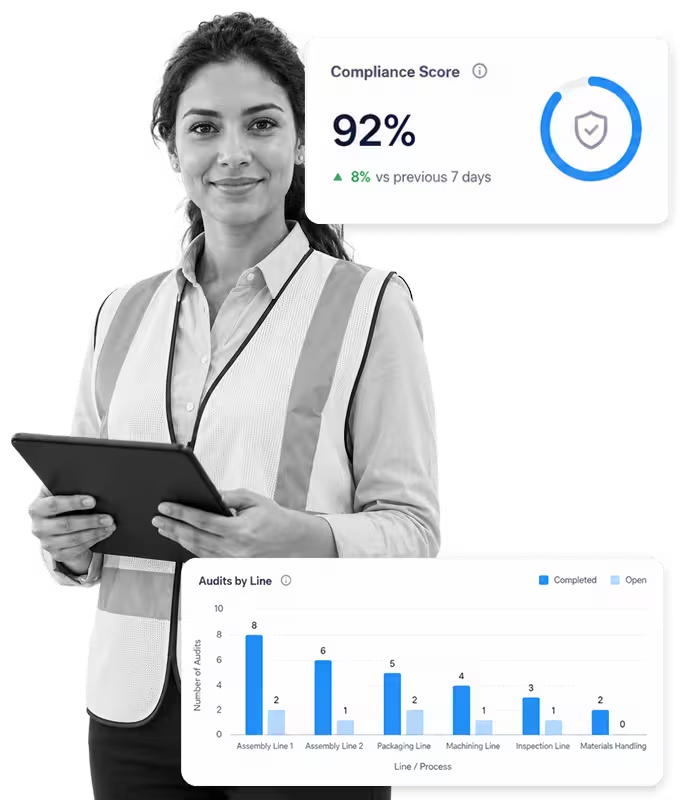
Audit in 2 Minutes

Give your quality team a mobile-first platform to run HACCP and GMP audits. Ensure every check is consistent, documented, and closed with verified corrective actions.

Eliminate paper documentation gaps

Your compliance is only as strong as your last record. Lost paper forms, late logs, and unverified actions create vulnerabilities. Replace manual errors with flowdit’s digital workflows—fully traceable across production lines, kitchens, and suppliers.

Meet HACCP, GMP, BRC, FSSC 22000, and ISO 22000 standards

Centralize audit planning and status tracking

Document critical controls with timestamped evidence

Address non-conformances before they escalate
Audit planning and inspection
Planning workflow and strategy board

Control audits across all sites

Multi-site operations often lose visibility. With flowdit, you schedule audits, automate reminders, and view compliance status across every location in real time. Never miss a mandatory check again.

Manage all audit tasks from one portal

Automated schedules for daily, weekly, and annual checks

Assign by site, shift, or specific auditor

Real-time visibility into multi-site compliance
Digital checklist on tablet

HACCP & GMP digital checklists

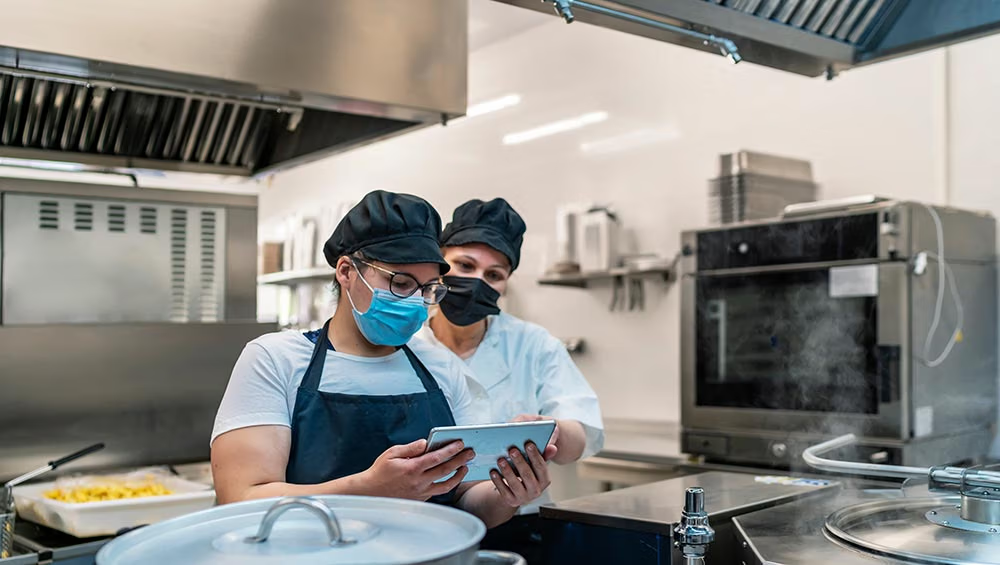
Stop chasing forms. Auditors use tablets to complete checks—including temperature logging and e-signatures—even in cold storage or areas without internet. Mandatory photo proof ensures accuracy at every step.

Standardized HACCP and GMP checklists

Automatic temperature range validation

Mandatory photos for all non-conformances

Full offline capability
Audit reporting dashboard

Audit-ready reporting, instantly

Skip manual formatting. After an audit, flowdit generates branded PDF reports instantly. Every report includes signatures, photos, and time-stamped proof, structured to pass BRC and FSSC 22000 certification audits.

Customizable scoring and critical flags

Automated grade and compliance calculation

Instant, professional PDF export

Full audit trail with e-signatures
Audit analytics and KPIs

Turn data into compliance trends

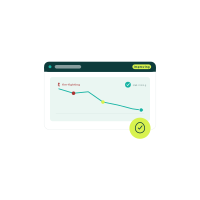
Don't just audit—improve. Use our analytics dashboard to spot recurring non-conformances across shifts and sites. Identify root causes and shift from reactive "fire-fighting" to continuous process improvement.

Track scores by site, line, and team

Highlight recurring high-risk issues

Measure effectiveness of corrective actions

Setup handled by our team
CAPA workflow collaboration

Close findings faster

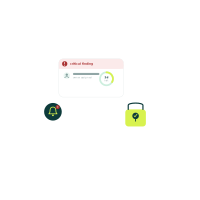
A finding without a follow-up is a liability. flowdit links every issue to a corrective action with a deadline and owner. Automated reminders ensure accountability, while mandatory verification checks confirm the fix actually worked.

Assign owners and deadlines to actions

Automated alerts for critical findings

Automated reminders for stakeholders

Required effectiveness checks before closure

Compliance software for every audit type

Manage all audits centrally. flowdit supports your full quality and compliance program with unified, standardized workflows.

HACCP Audits

Hygiene Inspections

GMP Compliance

Supplier Audits

Certification Prep (BRC, ISO, FSSC)

Digitize every audit step

Plan audits
Schedules & templates
Execute checks
Mobile-first, offline
Evidence
Photo, temp & signatures
Flag issues
Severity & category tags
Assign actions
Owners & deadlines
Track CAPA
Status & escalation
Report
Branded PDFs
Analyze
Trends & heatmaps

Client Success Stories

Explore more

FAQs

HACCP (Hazard Analysis and Critical Control Points) is a systematic method to identify food safety hazards - biological, chemical, physical - and control them at critical points in production. Instead of testing finished products, HACCP prevents contamination before it happens. It's the foundation of modern food safety globally and is mandated or expected by retailers, food service buyers, and regulatory bodies worldwide.

GMP (Good Manufacturing Practices) establishes basic facilities, equipment, and operational standards to ensure safe food production - clean workspaces, trained staff, equipment maintenance, record-keeping. HACCP is more targeted - it analyzes specific hazards for your product and processes. GMP is the foundation; HACCP is the precision tool. Most food businesses run both: GMP keeps the facility safe and organized, HACCP monitors critical steps where contamination risk is highest.

ISO 22000 is an international standard that combines GMP and HACCP principles into a certified management system for food safety. It requires documented procedures, staff training, supplier controls, and continuous monitoring. Companies pursuing it need certification by an accredited auditor. ISO 22000 is required by many retailers, export markets, and large food suppliers as proof of systematic food safety. Smaller operators may use HACCP without ISO certification.

BRC (British Retail Consortium) Global Standard is a food safety and quality certification required by most UK and European retailers. It audits manufacturing, warehousing, and logistics for HACCP compliance, traceability, and product safety. If you supply retail grocery chains in Europe or internationally, BRC certification is often non-negotiable. The standard is stricter than basic GMP and includes regular surveillance audits to maintain certification.

FSSC 22000 (Food Safety System Certification) is built on ISO 22000 but adds stricter requirements: additional food safety modules (allergen management, supply chain security), higher audit frequency, and mandatory surveillance every 6 months instead of annually. FSSC 22000 is recognized globally by large food retailers and is often required by multinational suppliers. If ISO 22000 is the baseline, FSSC 22000 is the premium certification with tougher controls.

Critical Control Points are steps in your process where you can apply controls to prevent, eliminate, or reduce food safety hazards to acceptable levels. Examples: cooking temperature (kills pathogens), metal detection (removes foreign objects), allergen segregation (prevents cross-contamination). Each CCP must have a defined critical limit (e.g., 75°C core temperature), monitoring procedures (thermometer checks), and corrective actions if limits are breached. Proper CCP identification is the core of HACCP effectiveness.

Daily: monitor critical controls (temperatures, cleaning). Weekly or bi-weekly: hygiene and GMP compliance checks. Monthly: internal audits of processes, records, and corrective action effectiveness. External or certification audits: annually for most standards, plus unannounced surveillance for BRC and FSSC 22000. High-risk operations (raw meat, dairy) may audit CCPs daily. The frequency depends on your product hazard level, regulatory requirements, and customer audit demands.

A non-conformance is any deviation from your documented procedures - e.g., temperature not reached, cleaning log missed, damaged packaging, or allergen cross-contact. Severity ranges from minor (late documentation) to critical (pathogen risk). Fix by: logging the incident immediately with photos, assessing product impact (safe? recall?), taking immediate corrective action (rework, destruction), investigating root cause, implementing preventive measures, and documenting everything. Digital audit systems link findings directly to corrective action tracking with deadlines and verification.

A comprehensive checklist covers: facility condition (cleanliness, pest control, water safety), equipment maintenance and calibration logs, CCP monitoring records (temperatures, times, signatures), cleaning schedules and verification, staff hygiene and training documentation, allergen controls and labeling, traceability and lot tracking, and supplier audit records. Include mandatory photo fields and temperature validation ranges for cold storage. Create separate checklists for daily monitoring (CCPs), weekly hygiene, and monthly system audits. Digital checklists can be customized per facility and guide auditors through conditional logic.

Temperature monitoring ensures foods are cooked, cooled, or stored at safe levels to prevent pathogen growth. Examples: cooking to 75°C kills most pathogens, refrigeration below 4°C slows bacterial growth, freezing below -18°C preserves safety. Monitoring includes thermometer checks at critical points, logging time and temperature, and documenting corrective actions if limits are breached. Digital systems with automated validation alert staff immediately if a reading is out of range, preventing unsafe product from moving forward.

Document the date, auditor name, specific area audited, the exact finding (e.g., "Temperature log missing for 14-18 July"), severity (critical/major/minor), and photos of the issue. Assign a corrective action with root cause, owner, deadline, and required verification method. Include e-signatures from auditor and manager. Keep records for the retention period required by your standard (typically 3-6 years). Professional auditors expect neat, timestamped records accessible during certification audits. Digital audit software creates branded PDF reports ready for inspectors.

Food safety prevents harm - pathogens, allergens, physical hazards that cause illness or injury. Food quality ensures customer satisfaction - taste, texture, appearance, shelf-life. A product can be safe but low quality; quality doesn't guarantee safety. Safety is non-negotiable and legally mandated; quality is market-driven. HACCP and audits focus on safety. Quality is managed through product testing, shelf-life studies, and sensory evaluation. Both matter, but safety is the legal and ethical foundation.

Prevention starts with GMP: clean facilities, pest control, safe water, trained staff. Prevent cross-contamination by separating raw and cooked foods, using color-coded equipment, and maintaining allergen-free zones. Control temperature strictly - cook to safe levels, cool quickly, store cold. Practice hand hygiene - handwashing stations, sanitizer, clean uniforms. Monitor suppliers and incoming materials. Document everything. Use systematic audits to catch gaps before they cause illness. A single outbreak can destroy a business; prevention is far cheaper than recalls and litigation.

Supply chain food safety means your raw materials, ingredients, and packaging come from verified safe sources. Supplier audits check their HACCP systems, certifications, traceability, and testing. If a supplier fails, contaminated ingredients reach your production - risking your customers and your reputation. HACCP and ISO 22000 require documented supplier verification. Audit suppliers at least annually, check their documentation, visit facilities if possible, and require certificates of compliance. Food safety starts upstream.

Start 2-3 months before audit: conduct internal audits to identify gaps, close non-conformances with documented evidence, ensure all records are complete and organized (3 years of temperature logs, training certs, cleaning schedules), verify staff training is current, test your CCPs (thermometers calibrated, critical temperatures met), document supplier audits, and mock interview key staff. Auditors will walk the facility, check documentation against actual practice, interview production staff, and verify corrective actions from previous audits. Thorough preparation prevents delays to certification and costly re-audits.

Fix your audit bottlenecks

Skip the pitch. Share your compliance challenge, and we’ll send you an actionable solution within 24 hours.

Contact Us
Mon-Fri, 9:00 am - 5:00 pm GST
+971 52 293 9955‬ support-int@flowdit.com
Dubai Digital Park, Office A5-Dtec, Dubai Silicon Oasis